Six Hours and Counting
Happy New Year, everybody. Sweet lord, it can't be worse than '06.
Be safe out there. See you Tuesday.
Be safe out there. See you Tuesday.
posted by JMW at 6:00 PM
0 comments


the ride with this blog is worth the fall
posted by JMW at 6:00 PM
0 comments
...New York Times columnist Frank Rich momentarily called a cease-fire. Brokeback Mountain was a heartland hit, he told anxious liberals. It represented “a rebuke and antidote” to President George W. Bush’s support for a constitutional amendment banning gay marriage. The movie, which he acknowledged has “no overt politics,” was “not leading a revolution but ratifying one.” After all, it was even doing well in Plano, Texas.Postrel goes on to describe Plano pretty accurately:
Nonsense, replied Los Angeles-based blogger Mickey Kaus, of Slate. Plano is no indicator. It’s not the land of pickups and gun racks; it’s just a bunch of yuppies. Kaus, an iconoclastic Democrat, quoted a reader who wrote, “Plano, TX is NOT the heartland. It’s a ritzy, upscale, SUV-choked, conspicuous-consumption-driven Dallas exurb populated by more east-coast ‘expatriates’ than native Texans.” In other words, this suburb isn’t Middle America. It’s an affluent island of educated blue in a sea of ignorant red. It’s a bunch of people who think more or less like Kaus and Rich. ... “What is Plano really like?” suddenly became a hotly debated question in the political blogosphere. The answer matters not because online pundits are considering relocating but because Plano has come to symbolize the fast-growing territories of Red America. As Plano goes, perhaps, so goes the nation. It’s the quintessential “boomburg” and the new Peoria: the touchstone Middle American town, a bellwether for retailers and culture watchers alike.
It allows residents to live a scaled-up, globalized version of the family-centered life of the postwar suburbs, a twenty-first-century Wonder Years. While you can find a $7 million estate in Plano, you can also buy a perfectly reasonable vintage ranch house, possibly with a pool, for less than $200,000. From that address, you can send your kids to excellent public schools. By contrast, on Kaus’s modest street in Venice, a tiny two-bedroom, one-bath bungalow was recently on the market for $754,000, making it one of the cheapest houses in the area (and the schools are lousy).But I think Washington Post style writer Hank Stuever, who Postrel quotes, got it closest to right with the fewest words when he wrote that Plano "(embodies) everything both dreamily enviable and vaguely unnerving about modern paradise.”
The economics of Plano change the sociology and the politics. Plano is more conservative than Silicon Valley at least in part because its cheap real estate and good public schools support a more traditional lifestyle. Many families don’t need a second income to live a comfortable middle-class life. Mothers can stay at home or work, often part-time, for personal fulfillment and luxuries like family vacations. These educated women also provide a safety net in hard times, like the tech crash. You don’t have to be work-obsessed to live in Plano, and at least in some circles, a work-oriented life seems rather eccentric.
Most Planoites would never ostracize the irreligious, if only because that wouldn’t be polite. But they also don’t really understand resolutely secular people—just as the New York Times has trouble grasping that smart, good-hearted, well-educated people can be conservative Christians. Cosmopolitanism, in both varieties, has its limits.
Labels: Texas
posted by JMW at 2:49 PM
4 comments
posted by JMW at 1:20 PM
2 comments
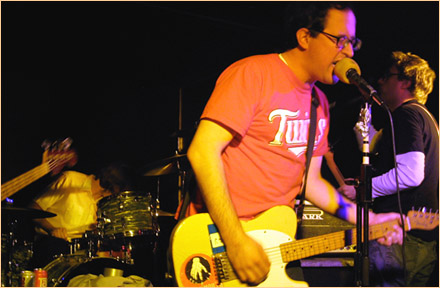 Everything I read about The Hold Steady had me prepared to hate them. Small and devoted hipster following. Got bigger after moving from the midwest to Brooklyn. Singer talk-spews more than sings. Eek. But I’m telling you, I took a long drive with this record and it was all I could do not to pull over to the side of the road and start moshing.
 Last spring, I embarked on the Second Annual Baseball and Cultural Exploration Across America with close friend, beef-jerky expert and polymath JF. I got to show him around Texas, a perfectly livable state (other than the fact that it was mid-May and it already felt like the surface of the sun), catch up with some old friends, visit family, take in a few games, and generally have a blast. Highlights included meeting the adorable children of two close friend-couples (four friends in total) in Austin, tipping back a drink (instead of several -- damned lack of public transportation) at a favored watering hole in Houston, and spending time with the usual band of outlaws and kin in Dallas. If you’re interested in learning more (and how could you possibly not be?), the experience has been preserved here.
 If you haven’t had access to any organ of literacy for the past few months, let me tell you: The Blind Side is the story of Michael Oher (pronounced "oar"), a very poor, very, very large teenager in Memphis who is somewhat miraculously accepted into a private school and adopted by a wealthy white evangelical family. He also becomes, after barely playing an organized game, one of the most highly pursued football recruits in the country. It’s a story that clearly belongs in the "Fiction, Truth Stranger Than" file.
 This is neck and neck with Band of Horses for record of the year. Pristinely produced, it reins in Chan Marshall’s more esoteric impulses and turns her into something resembling a standards crooner (in a good way). The veteran Memphis players who back her up don’t hurt. I loved Moon Pix, but I was starting to worry that Marshall would end up recording mostly in large fields, underneath thunderstorms, mewling about mental fracture and drunken despair. And I’m ready for more of that, soon, don’t get me wrong. But The Greatest feels like a beautiful, clear-eyed, necessary detour that may turn into another trip entirely.
 With occasional exceptions, the blog doesn’t really reflect the level of my sports geekdom. It’s not as much of a lingua franca in New York, so it gets buried a bit, under books and career and current events. But it’s there. And last March, I was staying up very late at night to watch what seemed like one good game after another in the first two rounds of the men’s college basketball tournament. But then, in the rounds of 16 and 8, the tournament became ridiculous. You couldn’t write as many dramatic, well-played games: Connecticut-Washington, Villanova-Boston College, Texas-West Virginia, George Mason-Connecticut. Every one of those games -- three of them went to overtime -- could be described as a classic, and they all happened in about 48 hours.
 In Spike Lee’s best movie in ages, Owen plays a bank robber who has all the angles figured out but has to deal with an obsessed Denzel Washington. Despite having his face covered by a white mask nearly the entire time (not even a sheer mask), Owen manages to be charming and menacing and completely in control of the screen.
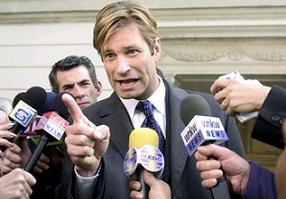 Thank You for Smoking was probably the new release that provided me the most laughs in 2006, and Eckhart is perfectly cast as a rascally lobbyist for the tobacco industry who’s so generous with his one-liners and his boyish grin that most people around him don’t mind that he doesn’t have the first trace of a conscience. Even when you think the movie is going to sell out the performance and have him Learn Something, you’re in good hands. He’s so great that he even overcomes others who were miscast (hi, Suri’s mom).
 I’ve said of only a few people that they can make me laugh just looking at them, but I’m not sure I’ve ever meant it as much as I do with Chappelle. He can be brilliantly funny on purpose, obviously, but he also makes me smile when he’s just ambling down the street. It probably says something about what a neurotic mess I am, but I sometimes just find it hysterical how relaxed he seems. (Let me beat the first clever commenter to this one: "I think I know a way you can look as relaxed as Chappelle.")
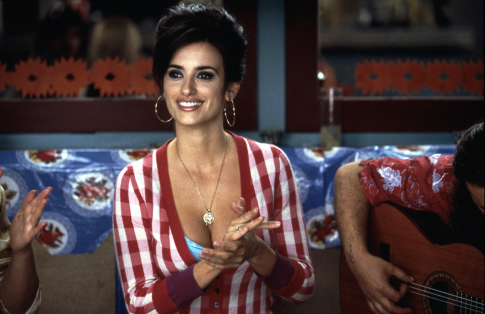 It’s no coincidence that these were probably the two best movies I saw in a theater this year -- they both feature phenomenal performances by their leads. Cruz has seemed a bit dreary to me in the past (though always stunningly beautiful), but for director Pedro Almodovar and in her native Spanish, she sparkles. The movie is the third or fourth in a row from Almodovar that’s a must-see and, even more than usual, you can’t take your eyes off Cruz.
 Mirren is just bizarre, she’s so good. No matter how often I read about how lanky she is, I don’t believe it after watching her get into full frump mode to play Elizabeth in the wake of Princess Diana’s death. The movie is terrific -- well written, tightly edited, beautifully shot -- but even given its many strengths, Mirren towers over it. If she doesn’t win the Oscar, it better be Cruz, or the academy will have even more than the usual amount of explaining to do.
Labels: Recommendations
posted by JMW at 6:50 PM
0 comments
Even in his earliest, wildest days, when his determination to kill an audience was such that he would swing from the rafters, cut flying splits from atop a grand piano, and even leap from a theatre balcony into the orchestra pit, his outrageousness was carefully calculated to convey that, while he cannot be contained, he is always in control. In contrast to the appearance of effortlessness that so many performers strive for in their quest to exhibit mastery, James Brown makes the display of effort one of the most striking features of his art.
posted by JMW at 4:25 PM
0 comments
posted by JMW at 12:07 PM
1 comments
posted by JMW at 1:52 PM
4 comments
The quiet doesn't last for long as Daffy launches into a wild, short version of La Cucaracha. This short segment has a plain background, suggesting it was cartooned separately and inserted tentatively, possibly due to some slight innuendos Daffy makes about a girl named "Cucaracha", parodying Lucky Strike cigarette ads: "so round, so firm, so fully packed, so easy on the draw!"... In perhaps the most outrageous double-take in animation history, Daffy turns into a giant eyeball - complete with lashes and blood vessels - when first coming face-to-face with the Wolf before also screaming, and running for his life.(Via Pajiba)
posted by JMW at 2:53 PM
1 comments

posted by JMW at 11:43 PM
2 comments
posted by JMW at 5:13 PM
3 comments
OK, I think this wraps things up. Many thanks to all who participated. In addition to some very high-quality writing, you turned me on to several great things I hadn't known of before, including Jay Dee's Donuts, the song "Mardy Bum" by Arctic Monkeys (I'd previously dismissed them, but this song is incredibly catchy), and the comic strip site written about below by Ms. Larson.
 Best album of the year: As it has been, so it shall be: Horses by Patti Smith. This album makes me want to do everything physically possible, and all at the same time. Like jumping and laying down, or having sex while drinking a cup of coffee and running. Binaries merge for Patti Smith.
posted by JMW at 4:50 PM
0 comments
And now a word from my friends in the Lone Star State:Casino Royale
 Though I'm a huge Bond fan (books, movies, cheesy theme songs), I fully acknowledge that half of the 20 previous official Bond flicks are bad (the original, campy Casino Royale starring Peter Sellers and David Niven doesn't count, nor does the rogue Never Say Never Again). But that is really beside the point. Once you get into a Bond frame of mind, you accept and even relish some of the badness. That said, with each new release, I do pray and hope for a truly good movie that will revitalize the franchise, something the recent Pierce Brosnan installments, record-breaking grosses aside, most certainly did not do. It wasn't Brosnan's fault. He made a fine Bond, but the scripts were just horrible.
 It’s a Dashiell Hammett, hardboiled 1930s detective novel transplanted into a modern-day, Southern Cal high school. It has the archetypal characters, the dense lingo, and a murder that's got to be solved by a damaged but principled loner. I had to watch it with the closed captioning on to follow the dialogue (I'm a moron), but in the midst of a surprisingly great performance, the kid from Third Rock from the Sun delivered my favorite line of 2006 when he was being threatened by a group of druggies: "Throw one at me if you want, hash head. I've got all five senses and I slept last night. That puts me six up on the lot of you." This is by no means an Oscar winner, but it's an intriguing concept that made me wonder why it hadn't been done -- or at least done this well -- before.
 For four hundred and two seconds on January 4th, my innards may have ceased to function. If not for the simple fact that I continue to exist, I would have no evidence to the contrary. For almost seven minutes, not including commercial interruptions, I could not tell you if my muscles moved, my eyes blinked, or if my lungs took in, or subsequently released, air. As far as I can tell, during that time, I consisted simply of my eyeballs and the sweat glands located on the underside of my hands. With 6:42 remaining in the 2006 Rose Bowl, my beloved University of Texas Longhorns were behind twelve points to USC; a team that many had deemed "the greatest college football team of all time." Any other year, I would gracefully lay down my king, acknowledge defeat, and scan the TiVo for an old "Veronica Mars" episode. Any year but this year.
.jpg) Music: Neko Case, Fox Confessor Brings the Flood, "Hold On." This reminds me of stuff I listened to in college when I was 21 and thought I had a lot of deep, intellectual angst (aka, time on my hands). But it also has great lyrics and inspired vocals: “The most tender place in my heart is for strangers. I know it’s unkind but my own blood’s much too dangerous.”
Music: Neko Case, Fox Confessor Brings the Flood, "Hold On." This reminds me of stuff I listened to in college when I was 21 and thought I had a lot of deep, intellectual angst (aka, time on my hands). But it also has great lyrics and inspired vocals: “The most tender place in my heart is for strangers. I know it’s unkind but my own blood’s much too dangerous.”
posted by JMW at 10:54 PM
3 comments
posted by JMW at 1:01 PM
2 comments
posted by JMW at 12:53 PM
0 comments
(Sorry, but thanks to the geniuses at NBC, who evidently don't want word getting out that SNL is still occasionally funny, the video has been removed from YouTube.)
posted by JMW at 11:05 AM
1 comments
We're nearing the finish line (appropriate, given one of the answers below). There's a special all-Texas friend edition to come, as well as perhaps a few stragglers. But for now:
 It's an entire steamer basket just completely full of those red chilis that everyone always picks off their kung pao chicken, mixed with tongue-numbing and probably narcotic Szechuan peppercorns, coated with oil and studded with frightened-looking little cubes of chicken that peer up at you as if to say, Please get me out of here, I can't take it anymore.
 TV Show: "The Office." I don't remember the last time that learning that a television show was a rerun during a given week made me actively sad. If you're still one of those people who loved the British version (like me) and therefore refuse to watch this one (totally not me), I feel bad for you.
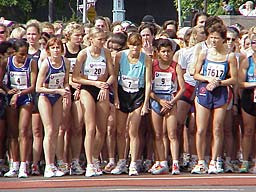 Although people have been participating in marathons for centuries (ever since Phidippides dropped dead in 546 B.C.), I just discovered the joys of endurance running this year, and I am here to say, "Yes, Virginia, there is a Runner's High."
 As you've read here in the past, The Mountain Goats is basically just one guy named John Darnielle. I won't go into detail about why I personally dig his music -- that would take a while. I'll just say that he's truly an original, which seems so rare these days in the world of popular (or even fringe) music, and to witness him tell his smart, painful, plaintive song-stories in the intimate Bowery Ballroom felt akin to being a fly on the wall in Jackson Pollock's barn as he worked. Spontaneous, a little dangerous, and a lot beautiful.
posted by JMW at 9:54 PM
2 comments
T-Rac is played by Pete Nelson, director of mascot operations for the Titans. As T-Rac, he wears a raccoon costume.
"It was the duty of the mascot to perform his job in a manner that would not cause injury to the opposing players," the complaint said.
posted by JMW at 6:01 PM
0 comments
More of your recommendations -- not all of them from 2006, but all of them loved...
 If DVDs are included, then I must add Lassie. I'm not kidding. The film, briefly in theaters last year, has no resemblance to the treacly American version. Set in Yorkshire in the late ’30s, it is often pretty grim, in the best tradition of children’s stories. The cast is fantastic, from the marvelous, magnificent Peter O’Toole as the Duke of Rudling to Samantha Morton to Peter Dinklage as a traveling puppeteer. I never cry at movies (I sat stone-faced through both Terms of Endearment and Beaches) but I sobbed from beginning to end.
 The term "psychological thriller" should be permanently stricken from the English language. However, first it should be applied to Nic Roeg's Don't Look Now. Donald Sutherland (with awesome '70s 'fro) and Julie Christie go to Venice to forget the death of their daughter. There, the husband comes to believe her ghost is stalking him through the city. Moody, suspenseful, and visually hypnotic.
posted by JMW at 3:15 PM
2 comments
More of the things you loved, with many more to follow...
 Rilo Kiley lead singer Jenny Lewis teams with folk harmonizers Chandra and Leigh Watson for a decided departure from Rilo Kiley's mopey indie rock. Fusing country, folk, and soul, the album is a beautiful look at the pains of love and Lewis' frustration with organized religion. But it's more than a gimmick: Lewis' emotional songwriting is a perfect match for the album's alt-country leanings, whether it's the declamatory "Rise Up With Fists!!" or the defiant "You Are What You Love" or the cover of the Traveling Wilburys' "Handle With Care." A wonderful album that defies easy classification, Rabbit Fur Coat is catchy, sad, and smart. And just about perfect.
 I've never heard anything like Ys before. First of all, the objective stuff: lyrically, it stands not just with Bob Dylan but with any story Adrienne Rich or Thylias Moss ever told in poetry; musically, Joanna Newsom uses the harp in an entirely new way -- somewhere between a guitar, a piano, a bass, a harpsichord, and a music box; vocally, the elfin harshness that may have made The Milk-Eyed Mender hard to take has matured into something cleaner and more controlled. Structurally, it isn't exactly pop music, or indie rock; you could, I guess, call it modern lieder, or a song cycle, or something like that, but who cares. The proper response to this album is gratitude, and repeated listening, then more gratitude. Repeat forever.
posted by JMW at 9:10 PM
1 comments
posted by JMW at 8:54 PM
2 comments
posted by JMW at 4:45 PM
0 comments
posted by JMW at 12:31 PM
0 comments
Over the past couple of weeks, I've asked several friends, colleagues, and members of the Witness Protection Program to come forward and share something they loved in 2006. I've genuinely enjoyed compiling their answers (and hope that more are forthcoming), and I think you'll enjoy reading them. Because I was lucky to get a bunch, I'm going to post them five or six at a time, starting with these below. More to follow...
The opening credits of Casino Royale
The movie itself is spectacular, but the opening credits to Casino Royale are, in three words, Uh, May and Zing. Daniel Kleinman, the title designer, gives a virtual "big up" to the father of film titles, Saul Bass, in a sequence that makes me want to buy a gun and shoot someone, if only to see their body shatter into a hundred little diamond shapes.
–Jen Tadaki
***
Dying to Say This to You – The Sounds
This is pretty fantastic if you're in the mood for something hyper-poppy. And it mysteriously has the girl from Misshapes on the cover which is: a) not necessarily a good thing and b) odd because The Sounds are Swedish, and that girl shows no signs of being Swedish. Anyway, I have found myself listening to, say, The Killers on my way to work and wishing that – just for the duration of a few songs, at least – there was a female vocalist. So I spin my thumb in circles until I hit The Sounds (their old album is also excellent) and it's always a good decision. Plus, they're made from bits of real Swede, so you know they're good.
–Sloane Crosley
***
The Devil Wears Prada
and
The Lay of the Land by Richard Ford Streep was Streep, but I will longer remember the performances of Stanley Tucci and Emily Blunt. The soundtrack, pacing, and shots of the league leaders in the world's great cities, New York and Paris, make it watchable on a regular basis (I know I am a little weird). Having worked for a slave driver with a touch of charisma also personalizes it a bit for me. Light fare for the serious-minded, but a major treat for someone who shies away from "deep thinking."
Ford's mouthpiece, Frank Bascombe, is at his introspective best as he chews on everything from strip malls in New Jersey to the sobering reality that his future is, in large part, behind him. There is plenty of deep thinking at work here, but also a large supply of laughs as Ford/Bascombe casts a savage eye on current mores.
–Jake Williams (aka Dad)
***
A perfectly-placed phrase
Well, this has been hard. While I didn't entirely sleep through 2006 (I read Pessl, saw The Queen, and even caught an episode of "Ice-T's Rap School"), nothing really stuck. I'm sure the fault was mine. How about my favorite sentence I read this year? Actually, we could boil it down to a favorite perfectly-placed phrase: "ugly fruit." It's from Winner of the National Book Award by Jincy Willett (2003), describing a real putz of a villain: "there is something particularly repulsive to me about the way his hands swell, wristless, painful, at the ends of his short arms, like ugly fruit."
–Edward McPherson
***
Donuts – J Dilla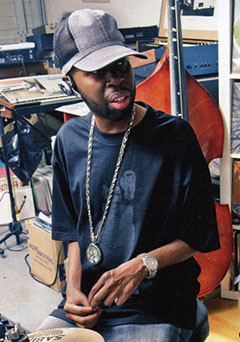 The impact of Donuts was compounded by the fact that its producer, 32-year-old James Yancey (aka Jay Dee aka J Dilla) passed away literally within hours of its release, a victim of complications associated with lupus and an incurable blood disease. In his dozen or so years of service to the hip-hop community, the Detroit native was probably more prolific than any other beat maker, and arguably more revolutionary, continually breaking hip-hop's unspoken rules about how drums should sound, what to sample, and the way to put it all together. Donuts represents Jay Dee's most experimental work; it's more like listening to his subconscious mind – the thousands of sound clips running through his head and the patterns into which he incorporated them – than listening to any kind of hip-hop record that came before it. Sadly, we won't have that experience again, but the extraordinary vision Jay Dee expressed in his short career – nowhere more evident than here – should inspire listeners and musicians for years to come.
–Strath Shepard (Visionaire)
***
Emily Haines
and
A dance performance Emily Haines, lead singer of Metric, released a solo record called Knives Don't Have Your Back (Domino). This and Neko Case's Fox Confessor Brings the Flood were the two best things I've heard all year. Forget Fiona Apple's return to form, forget Regina Spektor, even Nellie McKay. Haines is a girl at the piano who does not trade on cutesy or verbose quirk. These songs are not Performances – you don't get the sense that she's pulling herself up straight on the piano bench and clearing her throat before letting her freak flag fly. She's impressionistic, wry, bitchy, sorrowful, yearning; all the songs sound and feel effortless. Her record marries Sylvia Plath's craftsmanship and confessionalism to John Lennon's easy, wandering piano balladry. Cat Power fans will appreciate!
Also, "Dogs," a dance by Sarah Michelson that premiered at BAM. Michelson is a British choreographer who my dance writer friend introduced me to; this piece fused tropes of classical ballet to op-art to feminism to drawing room comedy. It was operatic and beautiful while being aware of where we get our ideas of both – and being aware of the fact that maybe it's too late for all that now, but she's going to try to do something approximating that anyway. Michelson grew up on a council estate going to clubs, so there's a real dry wit in her work, and a love of spectacle. Costumes and set design matter, and so do jokes. This was one of the best things I've seen – better than most movies and rock shows and even plays – this year.
–The Humorless Feminist
posted by JMW at 10:46 AM
3 comments

posted by JMW at 7:45 PM
1 comments

posted by JMW at 6:48 PM
1 comments
Labels: AP
posted by JMW at 5:57 PM
0 comments
posted by JMW at 5:38 PM
0 comments
After years of hearing thousands of petitions offered to the Lord, I cannot recall a single answered prayer.
How would you know, asks the believer, since God's ways are inscrutable to us? But prayer is one of those cases where an inscrutability argument will not work, because one knows what one has oneself requested, and therefore what has been denied. If you pray for a member of your congregation to get better and she dies, your prayer was not answered. To retort that God's mysterious way of answering your prayer--"but God needed her by his side in heaven, that's why he let her die"--might involve not really answering your prayer at all is essentially to nullify prayer, to kill it. I knew that at fifteen. Years later I read Samuel Butler's The Way of All Flesh, with its extraordinary image of the futility of prayer: a bee, inside a room, mistaking the floral wallpaper for the real thing and briefly attempting to extract its illusory pollen.
***
The model is Bertrand Russell's "celestial teapot," gleefully quoted by Richard Dawkins in The God Delusion. If, says Russell, I told you that a celestial teapot was orbiting the sun but that you could not see it, nobody would be able to disprove me; "but if I were to go on to say that, since my assertion cannot be disproved, it is intolerable presumption on the part of human reason to doubt it, I should rightly be thought to be talking nonsense." God is like the teapot, we are supposed to infer. Dawkins uses Russell to argue that we cannot prove God's non-existence, but then we cannot prove anything's non-existence. "What matters," writes Dawkins, "is not whether God is disprovable (he isn't), but whether his existence is probable.... Some undisprovable things are sensibly judged far less probable than other undisprovable things."
I agree with (Richard) Dawkins's conclusion, and consider God highly improbable, but I dislike the way he gets there. It seems to occur neither to him nor to Russell that belief in God is not like belief in a teapot. The referent--the content of the belief--matters here. God may be just as undisprovable as the teapot, but belief in God is a good deal more reasonable than belief in the teapot, precisely because God cannot be reified, cannot be turned into a mere thing, and thus entices our approximations. There is a reason, after all, that no one has ever worshiped a teapot: it does not allow enough room to pour the fluid of our incomprehension into it.
Interestingly, Dawkins himself seems to agree with this complaint. In a recent conversation in Time with the geneticist Francis Collins (who is a believing Christian), a conversation in which both men spoke eloquently, Dawkins was pushed by Collins to admit that, in Dawkins's words, "there could be something incredibly grand and incomprehensible beyond our understanding." That's God, said Collins. Yes, but it could be any of billions of Gods, replied Dawkins: "the chance of its being a particular God, Yahweh, the God of Jesus, is vanishingly small." In other words, the God of a particular scripture and tradition is a parochial and inherently improbable notion. But the idea of some kind of creator, said Dawkins, "does seem to be a worthy idea. Refutable--but nevertheless grand and big enough to be worthy of respect." To which one should add: by definition, then, this "grand and big" idea is not analogically disproved by referring to celestial teapots or vacuum cleaners, which lack the necessary bigness and grandeur.
***
(Harris') brand of public atheism is very good at the necessary disrespecting of religion, and it has a properly hygienic function. But how worthy of respect is it itself? The problem is that its bright certainty about the utter silliness of religion leads very quickly away from philosophy and argument. There is a dismaying gap, in these books, between the righteous anger of the critique of the many absurdities of religious belief and the attempts to account for why people have believed this apparent nonsense for so many centuries. I would rather that these writers refrained from speculation altogether than plunge into their flimsy anthropological kit bag. It is peculiar indeed to read (Richard) Dawkins's eloquent pages on evolution, and on how evolution may in the end solve the question of who created us, and then to find that very evolutionary theory being applied in the most hypothetical, rampantly unscientific ways to the question of why we have believed in God for so long.
posted by JMW at 5:12 PM
1 comments
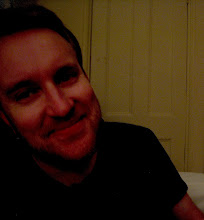
John Williams is still maintaining this blog, despite rumors to the contrary.