Tuesday, January 13, 2009

The List Sticks the Landing: 3-1

3. Built to Spill -- Perfect From Now On (1997)

Just eight songs, but an epic nonetheless. The shortest clocks in at 4:52, and the two longest reach toward nine minutes. This allows for two things that are absent from many rock albums: patience and complexity. “Stop the Show” starts with nearly three minutes of gently meandering guitar, and then the same figure gets sped up into a catchy pop song. After four minutes, “I Would Hurt a Fly” transforms into a storm of guitar. Melodies float around the album in an orchestral way, sometimes making brief appearances on multiple songs. Doug Martsch is widely considered a “guitar god,” and that usually doesn’t do much for me, but he manages to make axe wonkery sound thoughtful instead of noodling and endless. His adenoidal voice isn’t for everybody, but I like the way it delivers his off-kilter and often clever lyrics. (A personal favorite: “that net does not make me feel safe / all those holes make me nervous.”)

2. R.E.M. -- Automatic for the People (1992)

The fifth R.E.M. album on my list falls just short of the top spot. Since this is clearly my favorite band, No. 2 seems lower than it should. “Drive” is hypnotic, “Try Not to Breathe” and “Sweetness Follows” are heartbreaking, and “Nightswimming” and “Find the River” are the best one-two closing punch that I’ve ever heard. What’s more, this album had to be initially judged against my immense expectations, the kind that are normally impossible to satisfy. In the year and a half after Out of Time was released, I became an R.E.M. obsessive, and the band’s music had provided the soundtrack to my life -- and I’m plenty sentimental. But even having memorized and loved the band’s seven other (very good to great) records, this one somehow knocked me over. Again.

So Automatic means a lot to me, but being coldly objective, it has faults. “Star Me Kitten” feels like a B-side. “Ignoreland” is fuzzed-out fun, but as an ’80s-inspired political rant, it feels out of place among the stately material that makes up most of the album. These are nitpicks simply to explain why it’s not at the very top.

Upon release, this was widely written about as an album by rockers trying (with success) to age gracefully. The fact that it appeared more than 16 years ago is mind-boggling.

1. Radiohead -- The Bends (1995)

The criteria for judging these albums was fairly simple: Thorough quality (as little filler as possible), personal affection (“in a This Is Your Life kind of way,” to quote myself), and respect for the music qua music. On all three counts, The Bends excels. From start to finish, every song earns its place on a record of this quality. There’s not one I would cut. On a personal level, it was a big part of the background for my mid-20s, a formative time for my late-blooming (always-blooming?) self. And while Radiohead would go on to make strong and more innovative albums, the music here is top-shelf rock. It’s no surprise that an R.E.M. fan would love the jangly “High and Dry” and the elegantly sad “Fake Plastic Trees.” “Just,” the title track, and the underrated “Black Star” are straightforward guitar-driven numbers that sound every bit as vital as they did 13 years ago. Most importantly, for my taste, the band’s concerns and tone, despite a strain of paranoia (especially in the creepy closer, “Street Spirit (Fade Out)”), hadn’t yet reached their The Robots Are Coming phase. There’s a generous helping of (forgive me) premillennial tension on The Bends, but the sense of alienation it conveys is as personal as it is cultural.

Labels: , , , ,

Thursday, January 08, 2009

The List Returns From a Ridiculously Long and Unnecessary Hibernation: 4

4. The Innocence Mission -- Glow (1995)

You don’t always (or even often) choose the location where beautiful things happen to you, and thus unlikely places can be imbued with lasting affection. In 1995 or 1996, I was leaving the parking lot of a run-of-the-mill (read: pretty ugly) mall in the Dallas suburbs when the local NPR station played “That Was Another Country,” off Glow. It was early evening in the fall, and the sky was as visually striking as the mall was stultifying. The song begins with a few seconds of rumbling, almost tribal drums, unaccompanied. A distant, echoey voice makes cooing sounds in the background, not words. A chiming, crisp guitar enters the mix, and then a few lonely notes of stray piano. Then Karen Peris clearly sings, “Rowing out into the air.”

If you have a certain set of ears (e.g., mine), this opening is enough to hook you. But the song went on, with Peris singing enigmatic lyrics (like that opener) as well as more direct, emotional lines, like “he was fine / and what is more he was around / that was another country.” By the time she finished with, “are you all right? / you were my friend / are you all right? / you are still my friend / you didn’t go out of my life,” I was deeply in love.

Peris’ voice is fragile and childlike, but I don’t often find it precious. It’s a powerful instrument that can sound vulnerable, consternated, and soothed in turn, always with a common tone of undeniable spirituality.

The Innocence Mission is technically a “Christian band,” but don’t go thinking of Jars of Clay or, worse, Stryper. It took a while for me to catch on, but eventually I noticed lyrics like, “You go outside / You see the Holy Spirit burning in your trees / and walk on, glowing with the same glow.”

But the next line in that progression is, “Still you tremble out and in,” and the band is constantly mining this duality of recognizing and appreciating grace while admitting the difficulty and anxiety of life. In “Brave,” Peris sings:
Even if I'm shining, even if I'm shining here inside.
Even if I'm shouting do you see that I'm wanting,
And I always go to pieces.
And I have it in my mind
that the sky is tall and heavy,
when I could be brave

Oh I know it, I know it, here is God beside.
I meant it. I meant I'm sure of that.
But the sky is tall and heavy,
when I could be brave.
The band might or might not believe this, but I do think its explicit religious concerns are secondary to a kind of remystification of everyday life and domesticity. Glow is colored with moments of hearing talk “coming up over the stairs,” laying under the sky, “taking blankets to the bay,” sitting on a bridge, “crossing over to the tree side,” singing in the car, running across yards, walking home evenings over “a pale blue mile.” It’s also populated with people -- Junie, Aunt Ruthie, Mary (twice), Harry (twice), and Georgia.

I don’t listen to as much sad, gauzy music as I used to (this still leaves time to listen to it plenty). A lot of it -- even songs and bands I enjoy -- can be vague to the point of soporific. By contrast, Glow sounds like it was written about, and possibly recorded in, the house you grew up in. It pays attention to things.

It’s possible that Glow will always stand as the band’s peak. Their earlier records (despite some good material) are hampered by a certain, severely dated style of ’80s production. The two follow-ups -- Birds of My Neighborhood and Befriended -- are strong (the latter was No. 83 on this list) but increasingly quiet. The band’s drummer left after Glow, and its most recent work can verge on lifeless, with Peris whispering through songs that lack any rhythm. The warmly ringing guitars and mostly persistent beats of Glow, recorded in a tasteful way that accentuated Peris’ singular voice, represent a sound I’d love to hear them explore again.

I think of Glow as a collection of secular-inflected hymns, full of observance and consolation, typified in this line from “Go”: “you would think now hope would be tired, but it’s all right.”

Labels: ,

Friday, November 14, 2008

The List Won't Live Forever: 10-5

Programming notes: Today’s installment covers six albums, not the usual five, to set up a slightly different approach to the landing strip. Number four will get its own post soon, since I’ve been meaning to write about the band anyway. Then, the top three will be tackled together. Also, an important mistake: Somehow, in my haste to present the world with this incredibly important list, I left off one of my favorite 25 records -- It’s a Shame About Ray by the Lemonheads. Just flat forgot it. So, if you’re sending this list to the Library of Congress (its rightful home), or maybe just putting together a bound, embossed edition for a Time-Life collection, please add that album -- #22, 23, or 24 sounds reasonable -- and move everything else accordingly. Thanks.

Now:

10. 10,000 Maniacs - Our Time in Eden (1992)

It’s true that I love Natalie Merchant’s voice, so much that at various points in my life I would have signed away everything I owned or would ever own (which, granted, hasn’t added up to much) if, in return, she would sing me to sleep every night. I almost had contracts drawn up, just in case I ever ran into her and needed to make an offer on the spot. But this album, this high, is still an anomaly. I tend to love her voice a lot more than her material.

The maniacs sound better than they ever did. This was the band’s swan song (with Merchant and her defining vocals, anyway; another singer came on board after she left). Earlier albums had been, if marred is too strong a word, at least lessened by tinnier, ‘80s-redolent production values. The sound on Eden is more lush ("lusher" is a word, but doesn't it sound weird?), more confident, and Merchant the writer finds a sweet spot between the overly earnest lyrics of her early days and the occasionally generic material from her later solo years.

9. Richard Buckner -- Since (1998)

At first, the songs here sound more like sketches for future songs -- the 16 tracks pass in less than 37 minutes. But closer listening proves them to be concise little gems. This album marked Buckner’s full shift to a more obscure, impressionistic sound, which he’s followed ever since. His next record would contain songs of similar length, with titles like “Grace-I'd-said-I'd-Known:” and “A Year Ahead)...& A Light.”

For Buckner, though, obscure doesn’t mean ineffective. Just the way he sings and holds the word “faith” in one chorus is enough to emotionally carry the song. The beautiful, finger-picked “Raze” and “Ariel Ramirez” are favorites of mine, and the latter undoubtedly brought him a lot of new listeners when it was used in a Volkswagen commercial a few years ago. Songs like “Jewelbomb” and “Goner w/ Souvenir” and “Hand @ the Hem” are on the more propulsive side of things, and ensure an alternating pace that makes the album pass even faster. Buckner’s a strange, terrific lyricist, but it’s difficult to divorce his frequently off-kilter word choice from his dusky baritone without diminishing their impact.

8. The Hold Steady -- Boys and Girls in America (2006)

An object lesson in overcoming one’s preconceptions. When I first heard The Hold Steady described -- as a hipster-pleasing band with a lead singer who talked more than he sang -- I was certain I would hate them. More than that, I wanted to hate them. More than that, I wanted to hate them without ever having to listen to them.

By chance one day, I listened. What I hadn’t been told was that the band didn’t follow any of the indie-rock musical templates that have reigned for my entire adulthood. In the midst of a manufactured, somewhat dreary parade of Strokes, Hives, Killers, and the rest, the hipsters had (I was sure unwittingly) let slip through the gates a band that borrowed from the E Street Band, Led Zeppelin, and Thin Lizzy -- guitar-happy, piano-fueled, riff-stuffed music that wasn’t going to take no for an answer. And I hadn’t been told that Craig Finn might not be a gifted singer (to say the least), but he’s infectiously energetic, and on a very short list of the all-time best rock lyricists. Given the nature of rock music, it’s hard to think of a more ambitious album title than Boys and Girls in America, but these lovingly detailed songs (sometimes hilarious, sometimes heartbreaking) deliver a portrait of just that.

7. U2 -- The Joshua Tree (1987)

The record that topped my friend Dez’s list. From Bono’s opening cries of “I wanna run / I want to hide / I wanna tear down the walls that hold me inside / I wanna reach out and touch the flame / where the streets have no name,” we’re in Earnest Rock territory, and it’s never sounded better or less ashamed. There’s an incredible energy -- both intimate and soaring -- that’s maintained over the album’s first three songs, which I think are untouchable as a consecutive trio. Despite what the next entry might suggest, it’s hard to argue that this represents anything but the band’s peak. They’ve made an admirable go of it since, of course, but this set the bar for an encore performance impossibly high. It’s why they didn’t even try, ranging out into more experimental, more cynical territory over the ensuing decade. In this century, they’ve been dutifully maintaining their superstar status by churning out pale copies of the Joshua Tree sound, but rock is a young man’s game, and the elder Bono’s seemingly heartfelt (however pompous) desire to reach out and heal the world is somehow no match, spiritually, for the young Bono’s scaling of city walls and running through fields, his beautifully captured inability to find what he was looking for.

6. U2 -- Achtung Baby (1991)

I decided to put these albums back to back because it’s nearly impossible for me to disentangle them. Given my criteria for this list, they are essentially, complexly tied. I think The Joshua Tree is almost perfectly produced, and that the pleasures of its best songs will last longer than the best songs here. At the same time, The Joshua Tree initially washed over my 13-year-old self as just a distant series of radio singles -- I was still mired in a phase of my music-listening development that would best be labeled The Horror (more on that very shortly), and I didn’t appreciate the album as a whole until years later -- while Achtung Baby and my 17-year-old self had a prolonged, affecting relationship. The first singles, “The Fly” and “Mysterious Ways,” still sound remarkably fresh, and uber-hit “One” is that rare song that gets played approximately eight trillion times because it’s that good. But it’s the album’s consistency, the way every last song feels carefully attended to, which it has in common with The Joshua Tree, that puts it this high.

5. R.E.M. -- Out of Time (1991)

I’ll be the first to admit, this might not necessarily be about Out of Time, per se. I mean, I’ll defend every song on here, right down to “Shiny Happy People.” (Yes, “Shiny Happy People.”) But this is the album I’m least capable of judging objectively. As a 17-year-old marooned in a suburb of Dallas, who had spent his first 14 years on Long Island with a whole lot of Bon Jovi and Mötley Crüe and just general Z100 going on, I was only a rung or so above Hopeless. And losing my grip. Luckily, girls are famous for maturing faster than boys, and my girlfriend introduced me, properly, to R.E.M. I knew of them, but had lacked serious exposure. I listened to Out of Time a lot, and then, in that male/High Fidelity/obsessive collector way, I bought and memorized all of their records. So this was my gateway drug, and thus hard to see (or hear) clearly. From the radio-friendly “Losing My Religion” to the classic mopers “Half a World Away” and “Country Feedback” to the lead vocals of Mike Mills on “Near Wild Heaven” and “Texarkana,” I do think this is a great record, but it’s even more than that for me.

Labels: , , , , , , ,

Friday, November 07, 2008

The List is Really Dragging This Out: 15-11

15. Counting Crows -- August and Everything After (1993)

Loving this album (and liking this band, generally) is a bit like loving an early Quentin Tarantino movie. They both have clearly displayed influences, they both accomplish their goals remarkably well, and they are both made by people who probably shouldn’t open their mouths (or even appear) in public. Yes, Adam Duritz’s personality could use some work (at the very least, someone should have put scaffolding around him sometime in 1994 and only taken it down when he was ready for viewing again). But as a fan-critic -- ahem -- I try to judge cases on their merits, and August and Everything After is a plaintive, moving record, its occasional melodramatic excesses hardly alien to acclaimed rock music. Songs like “Round Here,” “Perfect Blue Buildings,” and “Raining in Baltimore” suffer from stretches of excessive mewling, but they all have redemptive qualities. The band (especially Duritz) leave themselves less open to criticism when they set a quicker pace -- “Mr. Jones,” “Rain King,” and “A Murder of One” are all terrific songs. “Sullivan Street” might best capture this album’s tone -- the nostalgic and heartsick lyrics, the pretty back-up vocals (by Maria McKee), and the shameless straining after something you can’t quite name. I’m not going to make claims for the band’s singularity -- their sound is just a successful knitting together of influences, but how many good rock bands are more than that? I do believe that Matchbox 20 and countless bands that followed miss some of the genuine existential feeling that makes Counting Crows’ worse qualities worth overlooking. Anyway, I think it’s just me and Greil Marcus who are still willing to loudly champion these guys, and I don’t know how I feel about that alliance.

14. Paul Simon -- Graceland (1986)

I’ll get the tangential criticism out of the way first. I’m sure this album is single-handedly responsible for any number of terrible pseudo-world-music compilations put together by such cutting-edge music distributors as Starbucks. That’s fine. It also opened the gates for some legitimately great global music to be heard widely in the U.S. for the first time. So on balance, it was a good thing.

According to Wikipedia, Simon has said the title track is the best song he’s written. I don’t know about that, but it’s very good even by his standards. I might give that honor to "Under African Skies," with its lovely additional vocals by Linda Ronstadt. Other favorites include “Diamonds on the Soles of Her Shoes” and “Homeless,” which both feature the stirring vocal work of Ladysmith Black Mambazo. The hit single, “You Can Call Me Al,” is as good as it is goofy.

13. R.E.M. -- Murmur (1983)

R.E.M.’s full-length debut remains a bizarrely timeless record. It certainly doesn’t sound like stereotypical ‘80s music. Even smart ‘80s music. In 1983, The Police and U2 released Synchronicity and War, respectively, and those (very good) records were forceful and even radio-friendly. The murkier, humbler production values of Murmur, which might be associated with a work not looking to draw attention to itself, ironically made it stand out. Rolling Stone named it the best album of that year, ahead of the two mega-bands previously mentioned and Michael Jackson’s Thriller.

More than half the time, it’s hard to make out what the hell Michael Stipe is singing, which we’ve come to learn is not always a bad thing. Instead, his expressive voice acts more as an additional instrument. When certain cryptic phrases do emerge clearly from the mix, they have an inexplicable potency. Every part of this next sentence has been said a billion times by now, but let’s make it a billion and one: Murmur married the Byrds with an aural equivalent of Southern Gothic, and "alternative rock" was born (only to die sometime around the formation of Candlebox).

12. Son Volt -- Trace (1995)

Trace is full of terrific songs, written and sung by Jay Farrar, who, unlike Jeff Tweedy, didn’t move from Uncle Tupelo to universal hipster fame, for which reason I like him even more. I’ve always thought there was something more authentic about Farrar, even if Tweedy’s grab-bag approach has resulted in a lot of very good music. I’ve made fleeting mention of sub-lists before, as a way to describe things, and this one’s easy: If I were making a list of my Favorite Albums to Bring on a Highway Drive, Trace would be number one, and whatever is second would be a long way off in the distance. It starts with “Windfall,” a country-ish tune with a chorus of “may the wind take your troubles away / both feet on the floor, two hands on the wheel / may the wind take your troubles away.” It also features these lyrics: “Catching an all-night station somewhere in Louisiana / sounds like 1963, but for now it sounds like heaven.” Other songs include lines like, “Southbound, you can taste the weather / it feels like home.” Basically, just typing the album’s lyrics, sitting in Park Slope without a car, is enough to drive a person mad. It really is.

Also, I’ve always believed that if I had a rock band, “Route” would be an ideal song to open a show with. (Oh, like you’ve never thought about stuff like that.)

11. David Gray -- A Century Ends (1993)

I’m a big fan of David Gray. And yes, I’m forced to be one of “those people” when it comes to his music -- I was listening to him six or seven years before his big breakout in the U.S, so I feel a bit territorial about him, and probably overly defensive about some of the criticism he's received since becoming a big star, since I don’t think there’s much to be defensive about. (Wait, is that defensive?)

Allegedly a punk rocker of sorts when he was younger, there’s more than a trace of that feeling left on his debut album, A Century Ends, released when he was in his mid-20s. It mostly features Gray and an acoustic guitar, but a consistent passion and occasional anger keep things from the more cloying end of the singer-songwriter spectrum. There’s a bit of Billy Bragg here, if that means anything to you, an alternating between English romanticism and political dissent. I don’t know whether he would still say this or not, but a good friend of mine (and someone with much less tolerance than I have for the mushy, I think he would agree) once said that Gray is among the very few who can sing the word “soul” without sounding cheesy.

The far more successful phase of Gray’s career has been marked by tasteful electronic accouterments and smoother vocals, and I think it’s a nice, warm sound for him, but because I discovered him when he was in a rawer mood, I think I prefer his songs that way. The opening “Shine” and the closing “It’s All Over” are regretful but forceful (especially the latter, which really builds a head of steam), and spaced almost evenly between them is “Gathering Dust,” a heartbreaking song about leaving a relationship without any real reason for it.

Labels: , , , , , , , ,

Monday, October 27, 2008

The List Reaches the Far Turn: 20-16

20. Whiskeytown -- Strangers Almanac (1997)

Before Ryan Adams was the absurdly prolific, Gap-pitching, hipster pastiche that he is now, he was the absurdly young, drunk, petulant, and brilliant leader of Whiskeytown. The band’s three records -- Faithless Street, Strangers Almanac, and Pneumonia -- are better than anything Adams has done since, and he’s done some pretty good things. He was 22 when Almanac was released, which, along with his notoriously belligerent, immature stage presence at the time, makes the record’s mature, graceful sound all the more remarkable. Helped along by the support of violinist, vocalist, and sometime co-songwriter Caitlin Cary, Adams convincingly conveys a weariness beyond his years. Two of the gentler songs, “Avenues” and “Houses on the Hill” are efficient heartbreakers, each clocking in at just over two and a half minutes. Other, rowdier highlights include the Alejandro Escovedo-assisted “Excuse Me While I Break My Own Heart Tonight” and the blistering “Yesterday’s News.” The song that’s grown on me most over the years is “Dancing With the Women at the Bar,” which starts as a quiet lament about following in a father’s lonely footsteps and picks up a bit of pace with each verse.

19. Uncle Tupelo -- Still Feel Gone (1991)

Two songwriters as talented as Jay Farrar and Jeff Tweedy, reared on country and punk music, don’t cross paths every day (they were high school classmates). The result was inimitable. Uncle Tupelo is credited with starting the alt-country movement, but a lot of that movement’s biggest names -- including Whiskeytown -- sound like they could exist without Tupelo’s influence. Whiskeytown, for instance, draws on country-rock like Gram Parsons and rock-rock like the Rolling Stones, but never really showcases in one song the alternately twangy and staccato sound of Tweedy and Farrar. Denying their level of influence is not to denigrate Uncle Tupelo but to properly praise them; they were sui generis. I think Still Feel Gone is the band’s most consistent and unique-sounding record. Songs like “Nothing” and (especially) “Postcard” are built on the band’s quick-change dynamic, “True to Life” might be my favorite song of theirs, and “Still Be Around” is certainly their prettiest, as Farrar sings, over a gentle strum, “when the Bible is a bottle / and the hardwood floor is home / when morning comes twice a day or not at all / if I break in two, will you be put me back together? When this puzzle’s figured out, will you still be around?”

18. Richard Buckner -- Bloomed (1995)

Continuing with the alt-country-heavy stretch of the list... Buckner has a loyal following, but I still think he’s one of the most underrated songwriters of the last 15 years or so. Over those years, his husky but pretty voice has been used in the service of songs with a slightly more experimental structure, but here on his debut things are mostly verse-chorus traditional. You can hear in his lyrics, though, the seeds of what would become a more poetic, fragmentary approach. There will be more on that approach to come. Buckner’s intelligence gives Bloomed a fresh feeling, but it’s his more comforting elements, like a consistent naming of people and places, that keep the record feeling familiar and rooted. On “Surprise, AZ,” which should be taught in songwriting seminars, he sings of the Arizona town in the title and also hopes to get “back to Oklahoma, where we belong.” And on “Cradle to the Angel,” after asking Austin and Atlanta if they’ve seen his “darling dear,” he sings, “once I wanted an explanation / now I’d settle for just a sound.” There’s the poetry. (I didn’t factor them into this ranking, since they didn’t appear on the original album, but today’s version includes five terrific extra songs that fit right in with the rest.)

17. The Smiths -- Best of, Vol. 1 (1992)

The Smiths, taken as a whole, deserve better than 17. I detract just a couple of points because it’s a compilation. But the band’s career was so singles-oriented that it’s impossible for me to include anything by them other than a compilation. This and the second best-of installment are what I listen to when I listen to The Smiths, and it’s hard to fault a collection as solid as this one, which shows off Johnny Marr’s glittering guitar work and slight variations on Morrissey’s clever lyrics and persona. Song titles like “Girlfriend in a Coma,” “Shoplifters of the World Unite,” and “Some Girls Are Bigger Than Others” reflect Morrissey’s mischief, but it’s the one-two closing punch of “Panic” and “Please Please Please Let Me Get What I Want” that might best capture the band’s dual purpose of irreverent shimmying and unrepentant moping.

16. Teenage Fan Club -- Bandwagonesque (1991)

When I was in high school, my friends Jeff, Shannon, and I would often spend part of Monday’s lunch hour talking about what we’d seen and heard the night before on MTV’s 120 Minutes. The two conversations I vividly remember to this day were about Nirvana and Teenage Fan Club. (Spin rated Bandwagonesque over Nevermind as the best album of that year, which raised some eyebrows at the time, but it's a judgment that I obviously think holds up.) Having been shamefully undereducated on classic rock to that point in my life, it’s safe to say that I loved this album in its entirety even before I loved records by The Beatles and The Byrds, among others. “The Concept” is a great six-minute opening track, with a strong melody and a three-minute outro, that leaves the band a bit of work to do in living up to the album’s start. But what follows is a whole slate of strong material, including “Star Sign,” one of the all-time great songs by anybody.

Labels: , , , , ,

Friday, October 17, 2008

The List Heads Toward the Teens: 25-21

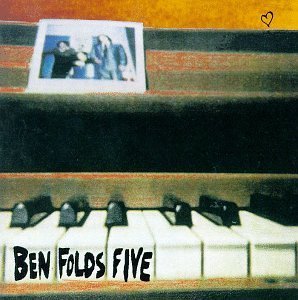
25. Ben Folds Five -- Ben Folds Five (1995)

I’m a big fan of Billy Joel, a fan of Elton John, and I was raised with an appreciation for theatrical music, a.k.a. “show tunes.” So my liking Ben Folds, a piano whiz who’s unafraid of showy, is one of the least surprising things about me -- and there’s almost nothing surprising about me at all. Just about every song on his band’s debut is, well, cheeky, and catchy and energetic as hell. On “Julianne,” he meets “this girl, she looked like Axl Rose”; on “Underground,” he sings, “we’ll be decked in all black / slamming the pit fantastic / Officer Friendly’s little boy has got a mohawk / and he knows just where we’re coming from”; and in the closing minute of “Philosophy,” he riffs twice on “Rhapsody in Blue.” This album, more than most on this list, is a good time. Even on a slower number like “Alice Childress,” there’s a bouncy, life-affirming quality. Music to turn a bad mood good, or a good mood better.

24. Michael Jackson -- Off the Wall (1979)

You know, life ain’t so bad when you’re livin’ off the wall. OK, so this album is also a good time. A reminder that Michael Jackson didn’t become interplanetary-famous just because it seems like he’s from another planet. The mega-hits -- “Rock With You,” “Don’t Stop ‘Til You Get Enough” -- were mega for a reason, but the album is pretty great the whole way through. This and the Saturday Night Fever soundtrack (which got consideration for the list), are proof that the disco era wasn’t just a joke. When you hear the over-processed, mechanical, grinding horror of Britney et al., it’s awfully easy to pine for the Bee Gees and for Jackson’s smooth, soulful voice.

23. Trash Can Sinatras -- Cake (1990)

Over the years, the Sinatras’ songs have become more delicate and carefully produced. (Their last album, the very good Weightlifting, is evidence.) But for this, their debut, things were a bit more rambunctious. Nothing crazy is going on, but for guys so interested in melody and using acoustic instruments, they make a spirited racket.

As Wikipedia tells it, the band’s music “makes frequent use of wordplay and pop harmonies.” Fair enough. Opener “Obscurity Knocks,” the band’s biggest hit, such as it was, includes the line “Oh, I like your poetry but I hate your poems.” I’ve always liked that. And things get even wordplay...ier(?), as in: “And the itch to get rich quick has never been so hard to reach,” and “I know she doesn’t play the field / but she likes to know the strength of the team,” and “Hands of the clock give me a round of applause / for getting out of bed / and the scars of the night before / have turned into scabs.” But lead singer Francis Reader sings with a Scottish accent (and occasionally at a speed) that often make the words a bit of a blur. And the songs can be moving; this isn’t wordplay in a Weird Al way.

But do beware. As one stymied customer on Amazon wrote: “I purchased this CD, thinking I had stumbled upon something by the group Cake that I didn't already own. I was EXTREMELY disappointed -- this is NOT by the band Cake!”

No. No, it’s not.

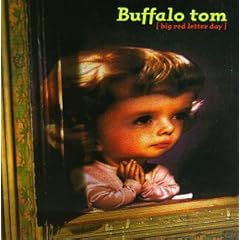
22. Buffalo Tom -- Big Red Letter Day (1993)

Early in its career, Buffalo Tom had the pretty funny nickname of Dinosaur Jr. Jr. But this record marked a departure from the band’s earlier, noisier sound. Lead singer Bill Janovitz has rusty pipes in the tradition of Paul Westerberg (the band also got a lot of early comparisons to The Replacements, though The Replacements Jr. just doesn’t have the same zing), and the band still makes a loud sound for a trio, but these songs are more consistently melodic. To drag my parents into this, I'll put it this way: If I were playing the previous Buffalo Tom album that made the list in the same room as my mother, it would take about 12 seconds for her to ask me to stop it. With this, she might even make it through a song or two before asking.

Like R.E.M. at its best, the band benefits from strong additional vocals, in this case from bassist Chris Colbourn. He helps out on harmonies, and takes the lead on “My Responsibility” and “Late at Night,” two of the album’s gentler songs. Over the course of 11 tracks and about 40 minutes, there isn’t a misstep on Big Red Letter Day, which is just a reliable, well-produced batch of rock songs.

21. Matthew Sweet -- Girlfriend (1991)

This should probably be higher.

By ‘91, Sweet had released two records with really terrible production that turned his songs into synthed-out ‘80s garbage. On Girlfriend, with the help of guitarists Robert Quine and Richard Lloyd, he turned his career around very quickly. Written and recorded in the wake of a divorce, Girlfriend has often been called a concept album about the cycle of a relationship. It does cover a lot of bitter-and-confused ground, and you don’t even have to go past the song titles to see it -- “Thought I Knew You,” “You Don’t Love Me,” “I Wanted to Tell You,” “Don’t Go,” “Your Sweet Voice,” “Nothing Lasts.”

Getting the picture?

Girlfriend covers some other ground -- God (“Divine Intervention”), international conflict (“Holy War”) -- but yeah, this is about a dude getting his heart smashed. Luckily, Sweet’s harmonies and his debt to The Beatles and The Beach Boys, among others, mean that his smashed heart sounds better than most people’s wedding day. “I’ve Been Waiting”, one of the more optimistic offerings here, is a close-to-perfect pop creation, and every other song gives you something to cut the misery. Even the closing “Nothing Lasts,” which plays like the title would lead you to expect, real funeral-like, is somehow pretty enough to avoid morbidity. In fact, most of the album sounds like its message: people hurt each other, they cause suffering, but they also go out in the sun and play guitar.

Labels:

Monday, October 13, 2008

This Post Brought To You By The List: 30-26

30. Smashing Pumpkins -- Siamese Dream (1993)

Between Jimmy Chamberlin’s drums and Billy Corgan’s guitar, Siamese Dream is all about well-produced noise. Only the whiny, droning “Disarm” hasn’t aged well. Most of the more aggressive guitar-fueled songs -- “Hummer,” “Rocket,” “Geek USA” -- sound remarkably healthy in 2008. And yes, Corgan’s general silliness is a drawback, but the band often makes enough of a pleasurable racket to distract from lyrics like “A crown of thorns / an image formed deformed / the mark I’ve borne / a mark of scorn to you.” Yeah, I’d better stop now before I drop this record about 45 places.

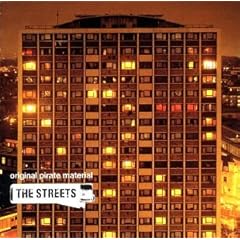
29. The Streets -- Original Pirate Material (2002)

With 22 one-star reviews on Amazon, it’s clear that Original Pirate Material isn’t for everyone. One reviewer calls it “amazingly bad,” but several others stretch for something more evocative: “insipidly bad and insultingly stupid” or “nothing more than a monotonous series of vapid and dull monologues” or “uniformly uninspired, sloppy, and irritating” or, quite simply, “this is the worst thing that has ever happened to music.” But my favorite is, “I am now dumber for having heard this album.”

I obviously agree with the (more numerous) positive reviews. American rap fans might find Mike Skinner’s cockney accent and goofy concerns (video games, soccer, a girl who doesn’t like him showing up late) off-putting. But it’s his sense of humor, the fact that he doesn’t take himself (or the genre) too seriously that makes him refreshing. (Or made him refreshing. This and the follow-up are very good -- the two Streets records since have been frequently embarrassing. He insists on singing more and more, which is just horrendous, and his lyrics are a shadow of their earlier sharp wit.)

There’s a sameness to several of the songs here, but three stand out for me -- the extra-propulsive “Same Old Thing,” the trippy and pretty “Weak Become Heroes,” and the hilarious “Irony Of It All,” which takes the form of an argument between a meat-headed beer drinker, Terry (backed up by a menacing beat) and a twenty-something pot smoker, Tim (“Now Terry, you’re repeating yourself / But that’s okay, drunk people can’t help that.”)

28. Radiohead -- OK Computer (1997)

I divide this album into two halves, and the first half does much more for me than the second. If the strength of the first six songs was maintained for OK Computer’s duration -- a tall order -- I wouldn’t be writing about it quite yet. But then, after the silly seventh song, “Fitter Happier,” in which a computer-coded voice lists life’s humiliations as presumably imagined by a disaffected middle-schooler, the songs sound more average and muddier to me. This is with the exception of “No Surprises,” a depressive’s lullaby that is one of the most beautiful things the band has done. In fact, the content of “No Surprises” is not radically different from “Fitter Happier” (disillusionment, routine, resignation, etc.), so I guess it’s all in the delivery.

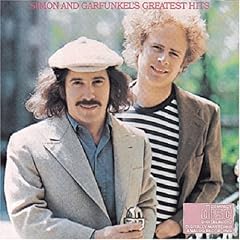
27. Simon & Garfunkel -- Greatest Hits (1972)

I didn’t want to include too many compilations on the list, but this one was necessary. It would be disingenuous to list another album by this duo when the hits are what I listen to most often. Released in 1972, it was also right on that border when collections were still respectable summaries, rather than something put out after two albums for the sake of extra sales. The songs here speak for themselves -- “The Boxer,” “Homeward Bound,” “America.” I think Paul Simon is one of the best songwriters of all time, so this is a lay-up. He’ll be heard from again on the list, too.

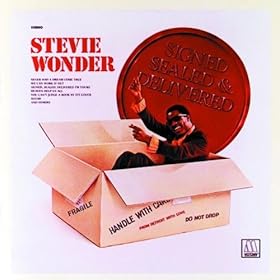
26. Stevie Wonder -- Signed, Sealed, Delivered (1970)

This was Stevie Wonder’s 12th record. Upon its release, he was 20 years old. Yeah. Get off the couch.

I love Wonder’s earlier albums. The later records that are even more critically acclaimed -- Talking Book, Innervisions, etc. -- are terrific. I love them, too. It’s a love-fest. But even though less is going on musically here, there’s something about the simple soulfulness of the songs and Wonder’s delivery that I slightly prefer. On the opener, “Never Had a Dream Come True,” just the way he repeats the title is stirring. Both the social ballads (“Heaven Help Us All”) and the personal ones (“Don’t Wonder Why”) are top-shelf. His cover of “We Can Work It Out” is considered by some superior to the Beatles’ original (I think they’re both great). And “Signed, Sealed, Delivered, I’m Yours” is one of my very favorite overplayed classics -- to listen to the whole thing, alone, away from an Obama rally or a greeting-card commercial or wherever it’s being played these days, and to hear him sing “I’ve done a lot of foolish things / that I really didn’t mean” is to take a great song back.

Labels:

Saturday, October 04, 2008

An Extra-Thick Slice of the List: 40-31

At this point, I'm sure my friend Dez will finish posting his list before I finish with mine, but in an effort to catch up a bit I'm naming ten below, rather than the usual five. And off we go:

40. Bob Dylan -- Blood On the Tracks (1975)

Dylan’s so purposely enigmatic that even this record, widely thought to be his most confessional and drawn from his own romantic troubles, may not be that easy to decipher. Still, it comes across that way, and songs like “You’re Gonna Make Me Lonesome When You Go” and “If You See Her, Say Hello” are as directly affecting as anything he’s ever done.

39. Van Morrison -- Into the Music (1979)

This record starts with three rollicking songs (“Bright Side of the Road,” “Full Force Gale,” and “Steppin’ Out Queen”) that should get you smiling, foot-tapping, or both if you have even the last shred of a soul. It also features the eight-minute “And the Healing Has Begun,” maybe my favorite song of his.

38. R.E.M. -- Life’s Rich Pageant (1986)

More to come about these guys, so I’ll keep this brief. This album has great atmospherics (“The Flowers of Guatemala”), great straight-ahead rock (“These Days”), and arguably the quintessential R.E.M. song (“Fall On Me”).

37. Gin Blossoms -- New Miserable Experience (1992)

Proof that you can borrow from your influences -- Byrds, Cheap Trick, R.E.M. -- and not bring much of anything new to the table and still hit it out of the park if you’re good enough. It sounds weird to name such A-list influences for a band with such a limited existence (though it recently regrouped). But really, almost every song the band released was a hit. For this album, their debut, songwriter and guitarist Doug Hopkins combined great hooks and melodies with surprisingly grown-up, wistful lyrics. From opener “Lost Horizons,” when singer Robin Wilson croons against a ringing, catchy guitar, “I’ll drink enough of anything to make this world look new again,” we’re in accessible but mature territory. Hopkins was kicked out of the band for alcoholism before this album was released, and he committed suicide near the end of 1993. The sense of his tragic life is all over a song like “Hold Me Down,” another very catchy number that belies lyrics like “remember when those doors swing open / and all the drinks are passed around / anytime the pickings look too easy / hold me down” and “I can’t remember why I like this feeling / when it always seems to let me down / soon I find I’m searching for the exit from the ground.” In “Hey Jealousy,” the band’s mega-hit, Wilson sings “you can trust me not to think,” which was originally “not to drink.” Wilson said, “we had so many booze references in our lyrics in those days. I suggested to Doug why don’t you just let me sing ‘think’ this time.” Wilson wrote lyrics for several songs, and on the band’s follow-up album, songs like “Follow You Down” and “As Long As It Matters” showed that Hopkins wasn’t the only engine for the band’s success.

36. The Beatles -- Help! (1965)

I’m a very big fan of The Beatles, so it’s weird to have their highest record be #36 on my list. That’s just a note to myself. I prefer their earlier, poppier stuff to their more experimental later phases (never been a huge sitar guy), thus this record as my current favorite of theirs.

35. Elliott Smith -- either/or (1997)

If it weren’t for the use of songs off this album in Good Will Hunting, Elliott Smith might have toiled in an undeserved cultish obscurity. He’s often compared to Nick Drake, and these songs show why, but his lyrical detail is more impressive than Drake’s. “Angeles” and “Rose Parade” manage to stand out on an album remarkably consistent in both sound and quality.

34. Sam Cooke -- Night Beat (1963)

Cooke’s voice is maybe the most soulful of all time. Let’s focus on just one moment in one song. This record could be composed simply of “Mean Old World” and it might occupy the same slot. The central lyric -- “this is a mean old world to live in all by yourself” -- is a nearly Platonic blues/soul line, and the performance of the whole song is A+. But then, at the 2:25 mark, Cooke hits a higher note and stretches out on “this is a mean world to be alone,” and it’s just perfect. Perfect. Those five seconds are the place where music goes where nothing else quite can.

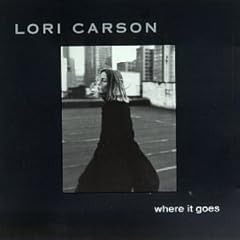
33. Lori Carson -- Where It Goes (1995)

Lori Carson is a singer-songwriter with a pretty/fragile voice whose material sometimes suffers from being too ethereal. On this album, though, simple (stark) lyrics about loneliness and heartbreak are sung over quiet, tasteful arrangements in a way that gets across pain and confusion, keeping Carson’s girlish voice from veering into the precious. If you’re preoccupied with something else, there’s no doubt this album might sound like wallpaper (pretty wallpaper, but still). And if you’re not in a mood to indulge your sensitive side, or you’re feeling happy, it could grate. But when this album hits the sweet spot of the bat, it goes a long way.

32. Prince -- Purple Rain (1984)

Would this record not have happened without the accompanying crappy movie? Kind of hilarious to think so. In any case, there are songs on here that do nothing for me (“Take Me With U” and “Computer Blue”), but with peaks so high (“Baby I’m a Star,” the title track, several others), who cares about valleys?

31. Low -- Long Division (1995)

For most of its career, Low -- a band composed of husband and wife Alan Sparhawk and Mimi Parker, along with several bassists over the years -- has composed minimalist music accompanied by haunting vocals. Sparhawk and Parker -- both with beautiful voices, Parker’s especially crystalline -- utilize unique, lingering harmonies that in lesser hands (or, through lesser windpipes) could be disastrously dull. Well, some will find Low disastrously dull no matter what, but I’ve always been mesmerized by them. Their best songs, with their meditative, repetitive qualities, have the strength of spirituals. Long Division is consistently stunning, but maybe never more than on the second track, “Below & Above.” Here’s the band performing it live at New York’s Knitting Factory in 1996:

Labels:

Wednesday, September 24, 2008

Make Way For the List: 45-41

45. Fiona Apple -- When the Pawn (1999)

This album is a good example of what I said this list would represent at the start: some Frankensteinian combination of my current respect for albums and the number of times I’ve listened to and enjoyed them throughout my life. Let’s take an example of something that had a lot of plays but doesn’t have much current respect: The Grease soundtrack. When I was a child, I would put on our stereo’s giant, dark-brown headphones and groove to that album for hours at a time, all the while wondering if my mother knew -- she couldn’t -- that “Greased Lightnin’” included the line, “we’ll be getting lots of tit.” Today, I still think the movie is a guilty pleasure, but it’s not like the soundtrack made my initial bunch of candidates for this list. Conversely, do I think When the Pawn is a better album than Abbey Road or Rumours? No. But did I manage to remove When the Pawn from my stereo for more than five weeks after I bought it? No, I did not. I hadn’t thought much of Apple’s debut, but on this follow-up she and producer Jon Brion crafted more mature (but still bratty when necessary), seriously addictive songs. If “Love Ridden” is too melodramatic by half, it’s still heartbreaking when Apple calms down to sing, “No, not ‘Baby’ anymore / if I need you, I’ll just use your simple name.” “Fast As You Can” was a great single -- on a list of my favorite individual moments in songs, I’d have to include when the frantic production abruptly stops and Apple belts the torchy, “sometimes my mind don’t shake and shift / but most of the time, it does.” And the album-closing “I Know” is one of the prettiest songs I’ve heard.

44. Nirvana -- Nevermind (1991)

From the time I was 17 until I was 22 or so, I heard “In Bloom,” “Come As You Are,” and “Lithium” so many times on the radio that I can’t even form a judgment of them. It would be like aesthetically judging the white noise in my brain. But it wasn’t like I changed the station a lot when they came on, so I figure I liked them. The best of the singles was the first, “Smells Like Teen Spirit,” which remains, with its catchy opening guitar riff and foot-tapping bass line throughout, more accessible than you ever remember between listens. (Maybe because I’ve only heard them a million times, not a trillion, these days I tend to prefer “Breed” and “Drain You” and “Lounge Act.”) I bristle at the idea of Kurt Cobain being called “the voice of a generation,” especially mine, since most of what he was screaming was either nonsensical or pat. Still, with this album, Nirvana created something new, and that’s not something you can say about rock bands every day (or every decade). They made music with the energy of punk, but they were clearly influenced by the melodies of The Beatles and R.E.M. as much as the anger and poses of The Sex Pistols. They also weren’t overly political (the band seemed most vocal about opposing rape and violent social bullying, which I think we can all agree on). Instead, they sounded angry and confused, disillusioned but energetic, and hyperaware of themselves as marketing objects. In that way, I guess they did represent my generation. Just don’t ask me to explain “sell the kids for food / weather changes moods / spring is here again / reproductive glands.”

43. The Hold Steady -- Separation Sunday (2005)

I’ve written about The Hold Steady many times around here, and I’ll be writing about them again in the future (hint, hint), so I’ll keep this brief. The first few songs on Separation Sunday are fine, but it’s the second half of the record that puts it this high on the list. “Stevie Nix,” alternating between raucous guitar and lonelier keyboard-driven moments, is one of their most epic songs. And even by the high standards of a band that knows the value of a great closing track, “How a Resurrection Really Feels” might be their best.

42. Chamberlain -- The Moon My Saddle (1998)

Chamberlain (now defunct) was formerly Split Lip, a hardcore-emo band out of the midwest. Their transformation on The Moon My Saddle is pretty startling. There are reminders of a hardcore band in the energy of the playing, but the songs are pseudo-epic, optimistic, and nostalgic, in the Springsteen and Son Volt tradition. (Singer David Moore’s voice, gruff but expressive, has been compared to the Boss, but I hear more of Buffalo Tom’s Bill Janovitz.) Like Springsteen, there’s a lot of directly addressing a lover and a lot of talk of travel, as in:
So let's be off tonight, while we're awake enough to drive, and by this time tomorrow we'll be alive.
And:
Who’d have thought girl, late last spring, we’d still be the same?
And:
In the backseat, the smell of vinyl and wet streets must have helped you get to sleep.
While this album isn’t exactly gentle -- lots of guitars and drums, and there’s only one spare, piano-driven song -- there’s no question that this is proudly sentimental music. Caution to those who roll their eyes at earnestness.

41. Centro-matic -- Redo the Stacks (1997)

In the mid-to-late ’90s, it being the fashion, I went to a small club in Dallas with a friend of mine to see Mary Lou Lord. I don’t remember much about Lord, but the band that opened for her, Centro-matic, became one of my favorites. Based in Denton at the time -- and now in Austin, I believe -- Centro-matic is led by the prolific Will Johnson. (In the little more than a decade since Redo the Stacks was released, he’s put out 13 more albums and various ep’s under different names -- Centro-matic, South San Gabriel, and, well, Will Johnson.) The band’s gotten a bit more polished, and put out some terrific music, but I still prefer the slightly more ragged, garage-band sound captured on the 23 tracks here, some of which are rough enough to sound like demos and some of which are short enough to serve more as spackle than songs. There are haunting songs about love (“Cannot Compete”), mental breakdowns (“Post-It Notes From the State Hospital”) and arcade games (“Starfighter #1479), but the blood flows best on strenuous guitar workouts like “Parade of Choosers” and my favorite song on the album, “Am I the Manager or Am I Not?”

Labels:

Monday, September 15, 2008

The List Wishes to Say a Quick Hello: 50-46

I know at least one person who will be upset by this (ahem), but I'm listing this week's five albums quickly below, for two reasons: 1. I'm busy writing about other things. 2. In the case of four of the five artists below, I've either written about them on the list already or will write about them further along in the list, so why double up? The one that won't be mentioned again -- #47 -- is a fairly simple case: It's a record full of terrific, durable pop songs.

50. Billy Joel - Songs in the Attic (1981)

49. Buffalo Tom -- Let Me Come Over (1992)

48. David Gray -- Flesh (1994)

47. Crowded House -- Crowded House (1986)

46. Beatles -- Abbey Road (1969)

Labels:

Thursday, September 11, 2008

Now With 5% More List: 55-51

This stretch of the list is packed to overflowing with mopey Brits and folksy middle-Americans, which, if you threw in a Stevie Wonder or Aretha Franklin record, is pretty damn indicative of my pop/rock collection. Here goes:

55. The Cure -- Disintegration (1989)

This week, I’m writing my own thoughts about these records, but this negative review on Amazon was too good not to share. It’s written by someone who goes by “Janitor X” and claims to live in “The Mountains,” so it has to be good. Take it away, Janitor:

Asking me to listen to the Cure or U2 is like asking me whether I would like to be shot in the gut or kneecaps. "Disintegration" is nothing but a 71 minute and 42 second pity party. Heavily laced with cheesy '80's synthesizers, the music and vocals are so fragile it's sure to induce nausea at least. ... It's not [sic] dark and gloomy album but rather a pathetic opus. Dark and gloomy is murder, suicide, and child molestation, not universal life experiences. Middle class anxieties and broken relationships are not heavy emotions; it's normal life experience. ... It’s [sic] surprised they don't whine about hangnails and bad parking spots. The cherry on top of this sunday [sic] is Robert Smith's voice. If his pathetic whining voice is not the most annoying thing recorded, I don't know what is. How anybody could stand it for more than five minutes is a mystery. There are not enough words to describe how awful the complete waste of time called "Disintegration" really is. Horrible, disgusting, nasty, wretched, and atrocious doesn't even to begin to describe the listening experience.

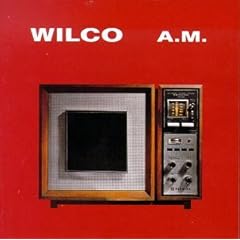
54. Wilco -- A.M. (1995)

I think that Being There, Summerteeth, and Yankee Hotel Foxtrot are fine albums, but I also think people go a little too nuts for Jeff Tweedy. He’s good at making a pastiche of his influences, and he’s a solid songwriter, but he also leaves me a little cold. Maybe it’s my problem. Or maybe I just don't feel like I love him as much as I should. After all, he’s on my list here and in other places (even later in this same post) -- between all of his bands and projects, he prominently contributed to four of my favorite 100 records. On Wilco’s debut, A.M., he hadn’t yet set his sights on being his generation’s Brian Wilson. He was still mining the alternative-country sound that he helped pioneer in Uncle Tupelo. The record is full of clever lines, like “I just can’t find the time to write my mind the way I want it to read,” and “we used to have a lot of things in common, but you know now we’re just the same.” Its music is more lilting and pastoral than the grinding sound that fellow songwriter Jay Farrar seemed to prefer in Uncle Tupelo. As much as I love Tweedy’s prior band, I’m not sure you would call their music “charming,” but it’s a word that fits A.M..

53. Billy Bragg & Wilco -- Mermaid Avenue (1998)

There aren’t enough good ideas like this one. Nora Guthrie took lyrics left unused by her father, Woody, and approached the British singer Billy Bragg, who has a long history of social conscience in his music. Bragg approached Wilco, and the rest is history. Including vocals from Natalie Merchant on a couple of tracks, these songs are rollicking (“Walt Whitman’s Niece”), gentle (“Ingrid Bergman”), and disappointed (“One By One”) by turns. It never feels like the gimmick it could have been. It sounds like Bragg and Wilco were making songs together in a basement somewhere for a long time and emerged with the best of the bunch. They released a sequel that wasn’t as consistent, but this first effort is both worthy and fun.

52. Morrissey -- Bona Drag (1990)

This solo album represents almost no drop-off from the best work of The Smiths, which is saying something. Here is Morrissey’s London, giddy London, with its hairdressers on fire, ouija boards, and interesting drugs. And of course, its desolate, soul-draining satellites:

Hide on the promenade,
etch a postcard:
"How I Dearly Wish I Was Not Here"
In the seaside town
that they forgot to bomb
come, come, come nuclear bomb

51. Jayhawks -- Tomorrow the Green Grass (1995)

Let me write this review in a way that a good friend of mine will understand and appreciate:

If you want to capture the feeling of this record, but you can’t find a copy, here’s what you do instead: Rent a car -- American-made, with some miles on it -- just south of Pittsburgh. Drive it down through West Virginia and into the Blue Ridge Mountains. While you’re down there, maybe in western Virginia or North Carolina, fall in love with a girl. Get back in the car (with the girl) and head for the midwest. Take in a few minor league baseball games. Settle down. Start a family. Maybe in Omaha, maybe Wichita. Wistfully watch your children as they fall asleep at night. Play catch with them in the yard. Go ahead and barbecue a little. Let the smell of smoke from the grill remind you of when you were a kid, bicycling through your Middle American neighborhood, filled with peace and promise and a premature nostalgia. When both you and your wife soon grow dissatisfied, take a road trip (alone) to California. Drive up and down the coast a few times. Start missing everyone, but keep driving until you really miss them. At this point, you might want to actually pick up a copy of the record. Pop it in the car stereo, and drive across breezy, sun-dappled highways back toward home, listening to “Blue” and “I’d Run Away” and “Over My Shoulder” and “Two Hearts,” and arrive on the porch around dinner time, crying and ready.

Labels:

Friday, September 05, 2008

Run, It's The List!: 60-56

I’m pretty wiped out from politics this week. So instead of crowing about these records myself, I’m going to deal with them in an appropriately democratic way -- by accompanying my choices with unfavorable reviews from users on Amazon. Of course, democracy has its limits, so I’ve corrected the spelling and grammar. Here we go:

60. Idlewild -- 100 Broken Windows (2000)

Yeah, you know what, I don't know why I got this. I listened to the sound clips and said "Not bad..." So, when I noticed this in a big, fancy electronic store, I bought it. And you know what? I feel like I'm listening to R.E.M. I don't even like R.E.M. Michael Stipe sounds like a goat, and so does this guy. I do like the actual music, though. That's why it got two stars. I don't know. If you like R.E.M., then get this. You'll like it. But it almost sounds like he's TRYING to sound like Michael Stipe. For some reason, this makes me want to wash a car on an autumn day. This is car washin' music. So, if you like R.E.M., goats, David Hasselhoff (?), or washing cars, buy it. If you like to laugh at David Hasselhoff, go watch "Knight Rider." Heh heh. Ehh...

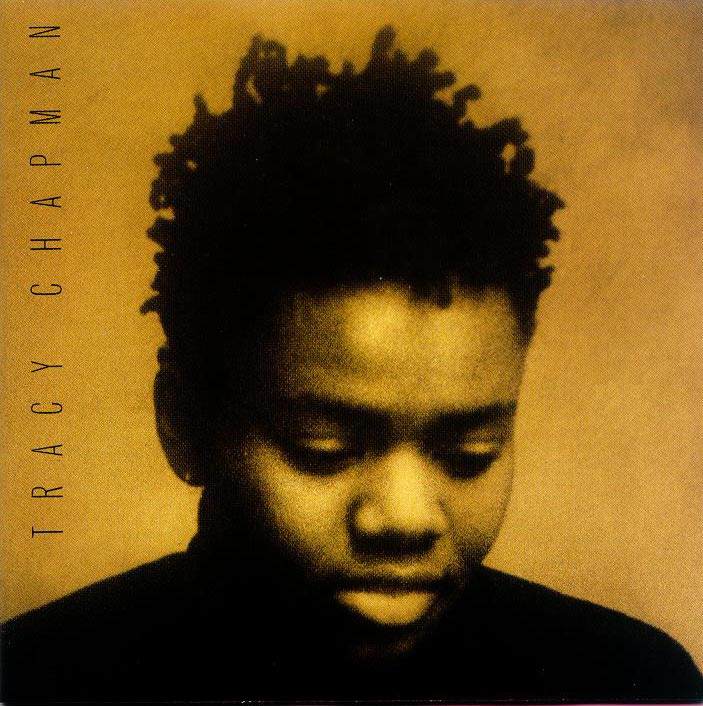
59. Tracy Chapman -- Tracy Chapman (1988)

"Fast Car" was a remarkable single for its time. We all talked ourselves into the rest of the filler on this CD, about which the best you can say is it's all extraordinarily average. If however art to you is didacticism, you will be in heaven. This has twee rhetorical questions ("Why are the missiles called Peacekeepers?"), exhausted imagery (I know somewhere in here a baby is crying) and worst of all an a capella sermon. All it lacks is some sort of "Save the bunnies" track. I HATE these songs. Some liberals feel that music is just another place to be a drag. (And these remarks are coming from a massive liberal!) I don't subscribe to that hogwash. 10,000 maniacs, Midnight Oil and Tracy Chapman are the bottom of the barrel; a very humorless barrel. This CD is an unrefined brow-beating.

58. Sinead O’Connor -- I Do Not Want What I Haven’t Got (1990)

I'll admit it. I'm a sucker for marginalized artists, especially those that have suffered inordinate criticism for being a bit different. (Nb. Marines get buzzcuts. Swimmers get buzzcuts. Head lice sufferers get buzzcuts. There's nothing bizarre about Sinead O'Connor getting a buzzcut.) I was all prepared to listen to every track on this album and love them. And...look, I'm sorry, but it just didn't happen for me. It's the same bland, harmless, unremarkable tone from beginning to end. I'm especially surprised because she's so outspoken and rebellious in real life; she should at least be capable of the same level of outrage as, say, Bad Religion. Bottom line, if you want a nice, peaceful album that's not going to offend anybody, this is the perfect choice. ("Waiting room music," I think it's called.) In fact, I dare say you could play it start to finish at a party full of right wingers, and they probably won't mind a bit.

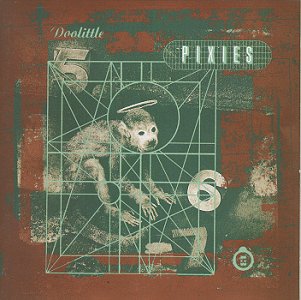
57. Pixies -- Doolittle (1989)

Doolittle is almost universally revered as the godhead of the Pixies, but I can't for the life of me understand it. Instead of a fully realized work, Doolittle is instead an incredibly promising work of a band that just hasn't matured yet. The Pixies would go on to produce their masterpiece in Bossanova. Trompe le Monde is also far superior. Doolittle does have one truly fantastic song -- "Monkey Gone to Heaven," which is a gift. And it has a few good to very good ones, like "Here Comes Your Man," "Wave of Mutilation" and (depending on my mood) "Debaser." But many of these songs (even "Debaser") would qualify as filler to people who aren't caught up in the hype. "La La Love You," for instance, is just some random noodling -- not a song at all -- with Frank Black trying his hardest to create some vocal interest with every whacked out sound at his disposal. Unfortunately, it -- like a lot of the other non-songs here -- comes off as just a little too cute.

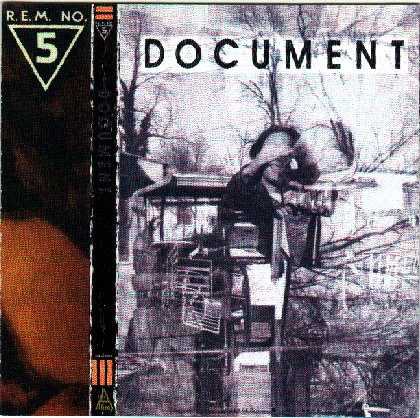
56. R.E.M. -- Document (1987)

R.E.M.’s fifth album continues the course set by Life's Rich Pageant of awkward political stadium rockers. Even filtered through the band's gift for offbeat melodies and flair for compelling arrangements, the likes of "Exhuming McCarthy," and "Disturbance At The Heron House" are unforgivably uninspired and stiff. The obnoxiously over-amped drums and guitars are no help either; tentatively playing some new type of music that you're slightly uncomfortable with is not made better by turning everything up to 11. Then there's "It's The End Of The World As We Know It (And I Feel Fine)," which, depending on your mood, is either classic R.E.M. or the worst song ever recorded. This album is smack-dab in the middle of R.E.M.'s late-eighties political period, and as such, whether or not you accept this period depends on your level of fandom...

Labels:

Tuesday, August 26, 2008

The List Returns From a Coffee Break: 65-61

I don't bunch these records together for any reason, but this week happens to feature five that are driven by distinct, powerful voices.

65. Iris DeMent -- My Life (1994)

Only listen to this record in the company of people around whom you would feel comfortable weeping. DeMent uses her acquired-taste warble on songs like “You’ve Done Nothing Wrong,” in which she consoles a lover who has left her (“just because I’m hurting / that don’t mean that you’ve done something wrong”). And that’s not the saddest song. Neither is the saddest song “Calling For You,” where she sings, “we fixed it, we thought, just by leaving / but the heart is too wise for deceiving / it’s calling for you.” And no, the saddest song is not “My Life,” which I posted here a few months ago. (That probably is the prettiest song, though.)

The champion tear-jerker is “No Time to Cry,” which clocks in at nearly seven minutes of strummed misery. “My father died a year ago today,” she begins . . .

Yeah.

The song is a lament for the way adult responsibilities can eclipse emotions. “I’ve got no time to look back / I’ve got no time to see / the pieces of my heart that have been ripped away from me / and if the feeling starts to coming / I’ve learned to stop it fast . . . there’s bills to pay and songs to play / and a house to make a home / I guess I’m older now / and I’ve got no time to cry.” There’s something undeniably maudlin about the lyrics, but with her voice and the arrangements backing her up, DeMent clearly works in a tradition that embraces the maudlin. Her songs are the musical equivalent of Old Yeller. And when you need a cathartic moment to yourself, I don’t know what else you could ask for.

64. Everything But the Girl -- Walking Wounded (1996)

OK, shake off the catharsis and get on the dance floor. Well, not quite. Walking Wounded was the duo’s first step away from gentle pop and toward club-influenced music, a step foreshadowed by the wildly popular remix of “Missing” off the prior album. But even though Ben Watt’s beats changed the sonic foundation of the band’s aesthetic, the continued presence of Tracey Thorn’s silky voice and grown-up lyrics guaranteed that the songs would appeal to a much broader audience than just ravers. Over the trippy backdrop of “Single,” she sings, “I'm sleeping later and waking later / I'm eating less and thinking more / and how am I without you? / am I more myself or less myself? / I feel younger, louder / like I don't always connect.” On “The Heart Remains a Child,” she finds herself wondering why she doesn’t “outgrow this kind of thing,” and concludes, “the mind may grow wise, but the heart just sulks and it whines and remains a child.” Even more directly, in “Big Deal,” she addresses someone who’s going through romantic distress and snidely says, “big deal / that’s the way we all feel.”

The album after this, Temperamental, is even dancier, and also terrific. It seems to me that Watt and Thorn, who are married, are done releasing albums as Everything But the Girl, which is a real shame. I’ll keep my fingers crossed for new material.

63. Van Morrison -- It’s Too Late to Stop Now (1974)

This double live album captures the legendarily moody Van in a good moment, kicking off with his cover of the cheeky-but-soulful “Ain’t Nothin’ You Can Do,” in which he sings, “when you got a headache / headache powder soothe the pain . . . when you got a backache / a little rubbin’ will see you through / when you got a heartache / there ain’t nothin’ you can do.” The horns-soaked record also features a raucous version of “Domino,” and a take on “These Dreams of You” that blows the original (on Moondance) out of the water. “Into the Mystic” is a beauty, and a perfect example of Morrison’s blend of beauty and flakiness. (Since I razzed Journey for the use of its music in films, it’s only fair to note that “Into the Mystic” has appeared in a trio that’s tough to beat for execrableness: Patch Adams, the Feldman-Haim vehicle Dream a Little Dream, and the TV show “Nash Bridges.”) The only song sorely missing on It’s Too Late from that period of his career is “And It Stoned Me.” It’s made up for by other great covers, like “I Believe to My Soul” and “Bring It On Home to Me.”

62. Ray LaMontagne -- Trouble (2004)

It’s hard to tell where this one will move. For now, this seems like a safe spot for it. When it first came out, I must have listened to it every day for several months on end. I probably would have put it in the top 15 in those days, just because I fall in loyal love like that. But now, after a somewhat less inspiring (but still good) follow-up, I’m eager to hear how his next album, out in October, sounds. I’m somewhere in between with him at the moment, so the album is somewhere in between on the list.

On this debut, LaMontagne proved he could write -- “Jolene” is a character study of a drifter, and “Narrow Escape” is a story-song complete with a tragic plot twist. It’s the more numerous and simpler sentiments, though, that work best, because LaMontagne’s voice is a raspy, rich gift that allows him to sing lines like, “I still don’t know what love means,” and not just get away with it but transport you. He takes fairly skeletal songs -- “Shelter,” “Burn,” “Forever My Friend” -- and makes them verge on profound through the passion and honesty in his voice. In this, he has something in common with the next singer on the list.

61. Aretha Franklin -- Lady Soul (1968)

There are massive hits here, like “Chain of Fools” and “(You Make Me Feel Like) A Natural Woman,” spirited covers (of James Brown’s “Money Won’t Change You” and Ray Charles’ “Come Back Baby”), and a guest spot by Eric Clapton (“Good to Me As I Am to You”). But it’s two songs in particular that stand out for me -- “(Sweet Sweet Baby) Since You’ve Been Gone” and the album-closing “Ain’t No Way.” The former made an appearance around here not too long ago. The latter is a slow burner that reduces me to a puddle just about every time. Sure, Aretha has sounded lovelorn on some of the previous nine songs, but mostly her tone is of the jubilant-and-tough, I will love you, but don’t make me step on your scrawny neck variety. Then, in “Ain’t No Way,” she belts out, “I know that a woman’s duty / is to have and love a man.” Coming from the woman who sang “Respect” and “Think” with conviction to spare, and following the lyrics “ain’t no way to love you / if you won’t let me,” this “duty” sounds less like some pre-feminism relic than a desperate challenge -- you hold up your end, I’ll hold up mine.

Bonus: While searching for an image of the record cover, I came across this photo, which is both disturbing and transfixing:

Labels: